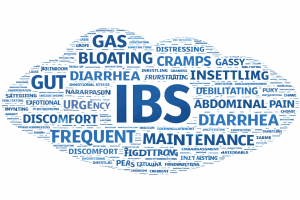

IBS can be unbelievably frustrating because it often feels unpredictable.
One day you’re fine. The next day your stomach is tight, crampy, urgent, bloated, gassy, or just “off.” You may plan your day around bathrooms. You may avoid certain foods, restaurants, long drives, social events, travel—because you don’t trust how your gut will behave.
And if you’ve seen doctors, tried diets, supplements, medications, and still feel stuck, you’re not alone.
Here’s a helpful way to understand IBS:
IBS isn’t “in your head.” But it is strongly connected to the brain.
That’s because your gut and brain are in constant two-way communication.
IBS is often a gut–brain communication problem
Your digestive system has its own nervous system (often called the “second brain”). It sends and receives signals all day long—about motility, sensitivity, pressure, fullness, and stress response.
With IBS, many people develop:
- gut sensitivity (normal sensations feel painful or urgent)
- irritable motility (too fast → diarrhea/urgency, too slow → constipation, or mixed)
- stress reactivity (stress doesn’t just affect mood—it affects the gut directly)
- anticipatory anxiety (“What if I have symptoms?”) which can trigger symptoms
This is why IBS can flare with stress, change, uncertainty, lack of sleep, or even excitement. It’s not weakness. It’s physiology.
The IBS loop that keeps people stuck
IBS symptoms often get reinforced by a cycle like this:
- Gut sensation (pressure, cramp, gas, urgency)
- Alarm (“Uh oh… what if this gets worse?”)
- Stress response (adrenaline, tension, shallow breathing)
- Gut reaction (more spasm, more urgency, more sensitivity)
- Avoidance / hypervigilance (food restriction, bathroom scanning, canceling plans)
Over time, the gut learns to stay on alert. The brain learns to watch it constantly. And that constant monitoring—ironically—can keep the system reactive.
Why hypnotherapy is a proven, evidence-based approach for IBS
This part surprises many people:
Gut-directed hypnotherapy is one of the most evidence-based (clinically proven) psychological treatments for IBS.
It has been studied for decades and is included in many IBS treatment conversations because it directly targets the gut–brain axis—the communication pathway that drives symptoms.
In plain language: it helps retrain the nervous system signals that influence gut sensitivity and motility.
And no—this isn’t “positive thinking.” This is structured, therapeutic work aimed at changing automatic body responses.
What gut-directed hypnotherapy works on
In IBS-focused hypnotherapy, the goals typically include:
- reducing gut sensitivity (so normal sensations don’t feel threatening)
- calming the stress response that triggers flares
- improving motility regulation (supporting more stable bowel patterns)
- reducing urgency/panic loops
- changing the brain’s prediction (“I’m going to have a flare”) into something calmer and more accurate
- rebuilding trust in your body
Many clients describe it as finally getting their system out of “fight-or-flight digestion.”
Why it can work even when you’ve tried everything else
IBS often has multiple drivers—food triggers, stress triggers, hormonal shifts, sleep, microbiome factors, inflammation, past illness, and sometimes a history of anxiety or trauma.
Hypnotherapy doesn’t replace medical care or dietary support. It addresses a piece that’s commonly missed:
the nervous system pattern that keeps the gut reactive.
If your gut has become conditioned to overreact, you don’t fix that with willpower. You retrain the pattern.
A helpful reframe: your gut isn’t broken—it’s protective
IBS symptoms can feel like betrayal, but the body usually isn’t trying to sabotage you.
Often it’s more like:
- “I’m on high alert.”
- “I’m scanning for threat.”
- “I’m reacting quickly to keep you safe.”
The goal is to teach your gut and nervous system:
“We’re okay. We can settle. We don’t need to overreact.”
A quick calming technique for IBS flare moments
When symptoms spike, try this for 60–90 seconds:
- Long exhale breathing
Inhale gently… exhale longer and slower. (This signals “safe.”) - Unclench the belly
Even a 10% softening helps. Many IBS sufferers brace without realizing it. - One phrase, repeated slowly
“My gut can calm.”
“My system can settle.”
“This is a wave. It will pass.”
This doesn’t “cure” a flare instantly—but it reduces the alarm that can amplify it.
What progress with IBS actually looks like
IBS improvement is often gradual and very real:
- fewer flares
- less intensity during flares
- less urgency and panic
- better predictability
- improved confidence leaving the house
- fewer food fear rules
- better sleep and calmer baseline
The big win isn’t just fewer symptoms. It’s getting your life back.
Work with Ada
If IBS has been controlling your schedule, your meals, your confidence, or your peace of mind, gut-directed hypnotherapy may be an excellent option—because it’s a proven, evidence-based approach that targets the gut–brain connection directly.
And if other people can retrain their gut and nervous system to become calmer and more stable, you can as well.
Office & Contact Info
Hypnotherapy Advantage
Atrium Medical Arts Building
224 Taylors Mills Rd, Suite 105-a
Manalapan, NJ 07726
ada@hypnotherapyadvantage.com
(732) 333-6680